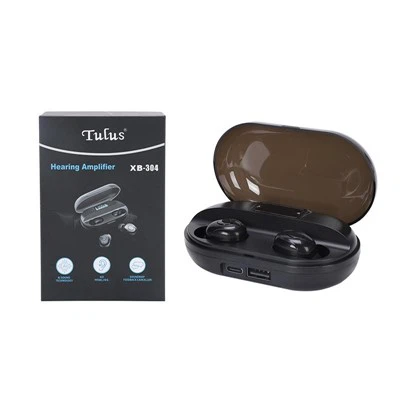
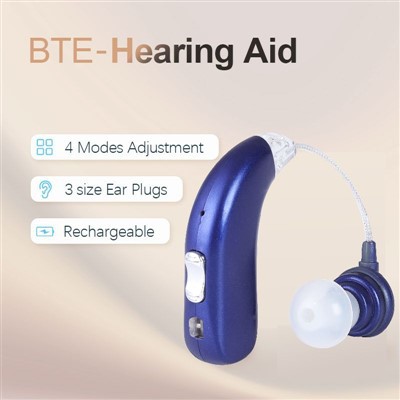
Global market status Hearing aid market:The global market size will be about $10 billion in 2024, with traditional hearing aids dominating, but the penetration rate of personal sound TWS amplifiers is less than 10%. Emerging categories (including halternecks) will grow by more than 30%, with a market size of about $1.5 billion in 2023 and expected to exceed $2.5 billion in 2025.
Such as QCY and Haylou: launch cost-effective products ($50-100) through ODM mode to seize the market.
|
Hot Model |
XB-503 |
|
Application |
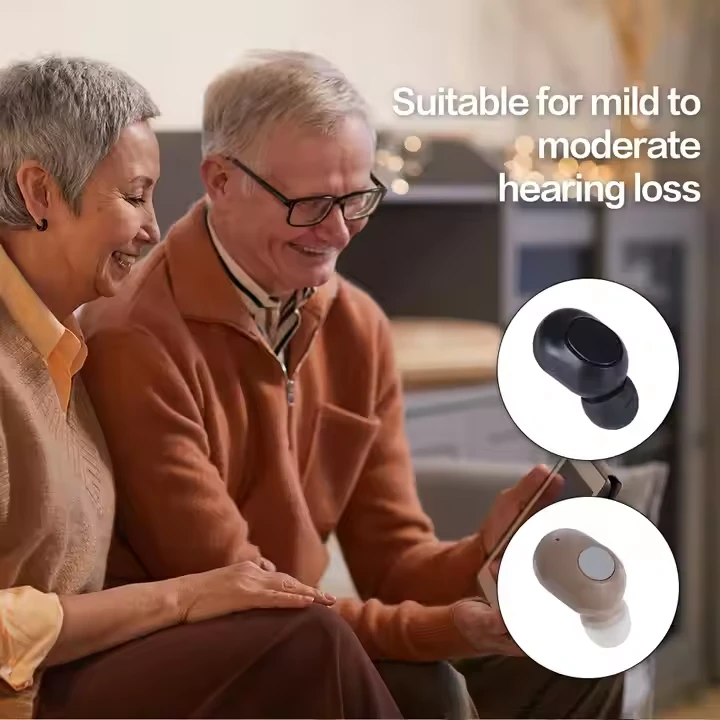
hearing impaired, mild to moderate hearing loss |
|
Battery |
Charging lithium battery |
|
Product weight |
2.3g |
|
With package weight |
25g |
User needs and pain points of hearing aids
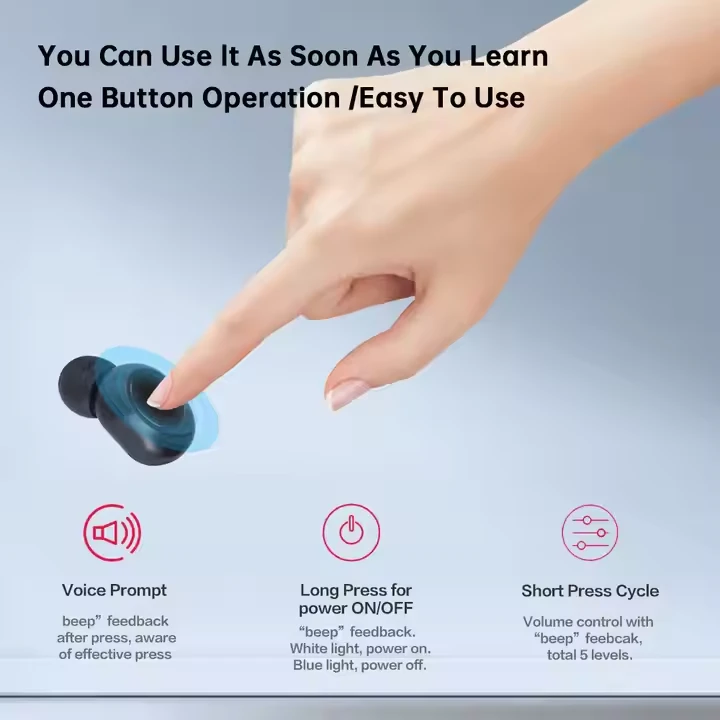
1. Middle-aged and elderly hearing-impaired groups: need to be hidden, easy to operate, long battery life, and resist the label of "hearing aid".
2. Young consumers: the pursuit of multi-function (commuting and listening to songs, conference calls), and applicability to sports scenes.
3. Key pain points: Technical barriers: Traditional hearing aids need professional fitting, and the accuracy of consumer-grade product algorithms is insufficient.
4. Market perception: Users confuse "hearing aid headphones" with "medical equipment", which requires education costs.
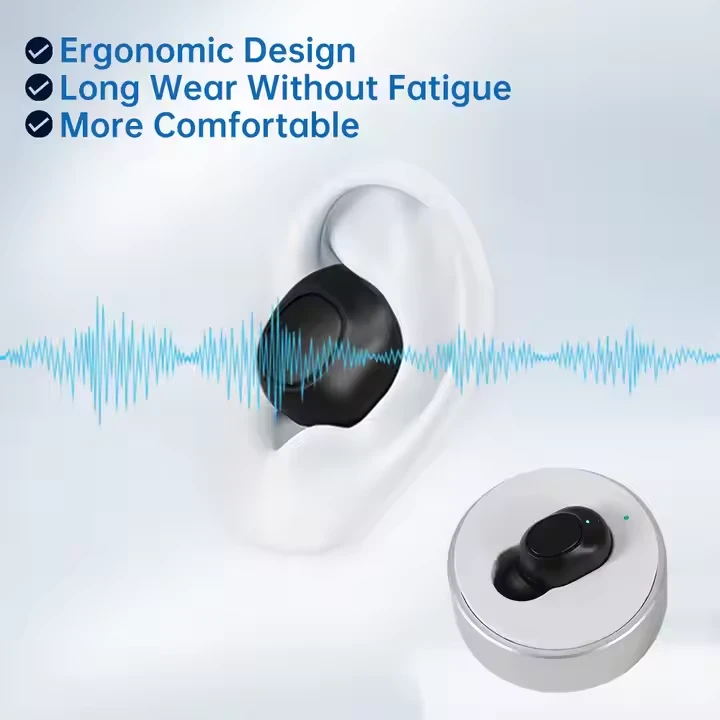
5. Design contradiction: The halterneck style needs to balance comfort and fashion, and avoid the "old age" label.
Is more channels better?
Hearing aid channels refer to the frequency range that can be adjusted independently, and the more channels, the finer the compensation for sound (especially in the case of complex hearing loss): Mild loss: 4-8 channels are sufficient, cost-effective. Complex environment requirements (such as meetings, social interactions): More than 12 channels can better separate voice and noise. Misunderstanding reminder: The number of channels needs to match the debugging technology of the fitter, and if the high-end channel is not properly debugged, it will not be as stable as the basic model.
How to choose the shape of your hearing aids
- Behind-the-ear (BTE): Suitable for severe hearing loss, strong battery life, full functions, but those who are prone to sweating in the auricles need to pay attention to moisture protection.
- Intra-ear (ITE): Custom-fitted to the ear canal with good concealment and suitable for moderate to mild loss, but may be uncomfortable for narrow ear canals.
- Deep Ear Canal (CIC): Virtually invisible, but requires frequent battery replacement, chosen with caution for children or those with limited hand mobility
Hot Tags: personal sound tws amplifier, China personal sound tws amplifier manufacturers, suppliers, factory, Smart Digital TWS Hearing Amplifier, TWS Hearing Amplifier Device For Ears, TWS Rechargeable Bluetooth Hearing Amplifier, TWS Hearing Amplifier For Seniors And Adults, tws hearing amplifier, TWS Rechargeable Hearing Amplifier